History of Scouting

1907 – 1908
Early Beginnings
Scouting began as a programme for boys aged 11 to 18.
1907: The first experimental camp organized by Robert Baden-Powell with 20 boys at Brownsea Island, United Kingdom was a great success.
1908: Baden-Powell published “Scouting for Boys”, which was an immediate hit and has since sold over 100 million copies.

1909 – 1918
Expansion of the Scout Movement
1909: "Scouting for Boys" was translated into five languages. It produced a Movement that quickly adopted the name “The Boy Scouts”.
1909: A Scout rally in London attracted more than 11,000 Scouts.
1910: Baden-Powell started the Girl Guides under the leadership of his sister, Agnes.
1914: After the outbreak of World War I, the Patrol System proved highly effective and kept the Movement afloat as many adults were called up for the war, with the youth entirely leading the patrols.
1916: Cub Scouts was started for boys under the age of 11, supported by the publication of the “Wolf Cub’s Handbook” and using Rudyard Kipling’s “Jungle Book” as a framework.
1918: Rover Scouts was formed for older boys and young adults.

1919 – 1922
Scouting’s World Events and Governance
1920: The first World Scout Conference (then known as the International Scout Conference) took place during the first World Scout Jamboree in London, United Kingdom, with 33 National Scout Organizations in attendance.
1920: The World Scout Bureau (then known as the Boy Scouts International Bureau) was established in London, United Kingdom.
1922: The 2nd World Scout Conference was held Paris, France, with 31 National Scout Organizations represented. Global membership stood at just over 1 million Scouts.
1922: The first World Scout Committee (then Boy Scouts International Committee) was elected.
1914– 1945
The World Wars
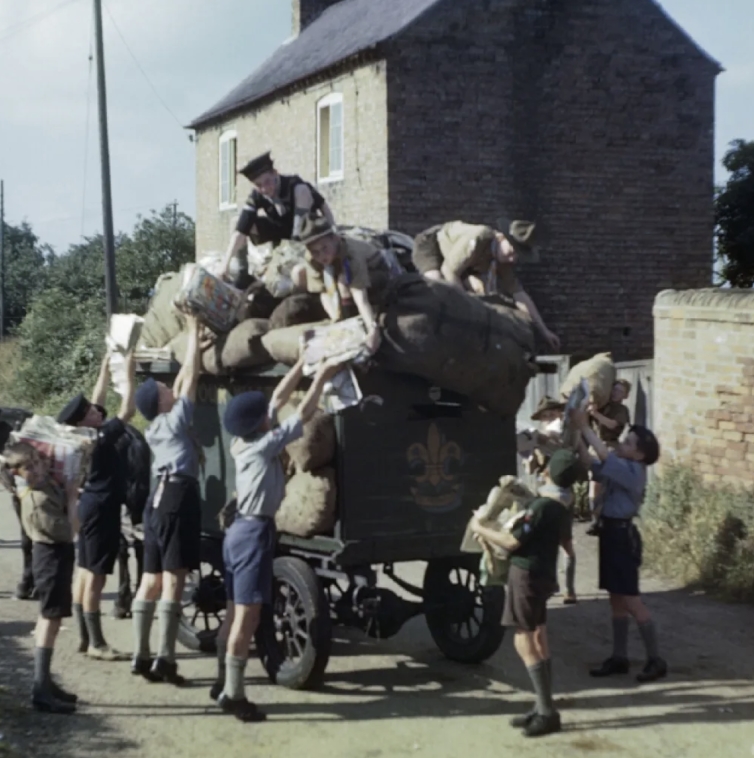
Between the two world wars, Scouting continued to flourish, except in totalitarian regions where Scouting activities were banned. In occupied countries and in those with totalitarian regimes, Scouting continued in secret with Scouts playing important roles in the resistance and underground movements. Scouts supported their countries through the world wars by feeding the hungry and helping the injured. In some places, Seas Scouts acted as coast guards.

1945 – 1980
The Evolution of Scouting
1947: World Organization of the Scout Movement was granted General Consultative Status to the United Nations Economic and Social Council (UNESCO).
1960-1980: Many countries gained their independence, resulting in National Scout Organizations joining or rejoining as members of World Organization of the Scout Movement.
1980-2007: Scouting re-emerged in every country where it had existed before World War II and started across newly independent countries in the Commonwealth of Independent States following the Cold War. Scouting in developing countries gradually evolved into a Youth Programme, which was designed by local Scout leaders to better meet the needs of their communities. Scouts became more involved with social, economic, and environmental issues in their communities and countries.

2007
A Century of Scouting
The Scout Movement celebrated its 100th anniversary by returning to its roots in the United Kingdom for the 21st World Scout Jamboree.
On 1 August, millions of Scouts from around the world celebrated the Scout Movement and its growth from humble beginnings to becoming a global Movement with millions of members in nearly every country around the world.

2010 – 2020
Promoting Peace and Sustainability
Scouting continued to expand its membership - reaching even remote islands in the Pacific and Caribbean - while innovating and adapting its educational offerings to reflect the current needs and aspirations of young people.
2011: The Messengers of Peace initiative was created to promote peace building and support Scouting’s impact on local communities.
2018: Scouts for SDGs was launched with the aim of engaging the Scout Movement in making the world’s largest coordinated youth contribution to the SDGs.
2020: The Earth Tribe was launched as a global youth community for environmental action and to enable young people to tackle the impacts of climate change.

2020 – 2022
Global Pandemic
2020-2022: Scouts around the world showed the Movement`s resilience by taking action to support their communities and adapting to global restrictions through virtual and at-home programmes.
2022: The Global Youth Mobilization was launched in an effort to support the development of young people in a post-pandemic world. It is as a partnership with the Big 6 Youth Organisations, which is comprised of the World Organization of the Scout Movement, World Association of Girl Guides and Girl Scouts, World Alliance of Young Men’s Christian Association, World Young Women’s Christian Association, International Federation of Red Cross and Red Crescent Societies, and The Duke of Edinburgh’s International Award.

2022- The present
The evolution of Scouting
In the wake of the COVID-19 pandemic, the World Organization of the Scout Movement has continued to develop a new strategy to better respond to the challenges of the modern world and the needs of young people. One of the main areas of development is to attract more young people to Scouting and increase the diversity of membership, including more effective work with young people from low-income and vulnerable groups.
In addition, the Scouts actively cooperate with governments and other NGOs to implement the UN Sustainable Development Goals and support environmental protection.
Want to know more about the history of Scouts of Ukraine?
Follow this link!